Layoffs in Tech
I would be remiss if I did not pay attention and feel some kind of way about the latest layoffs in tech - especially as I am actively switching to a new startup opportunity. Two events have markedly consumed the majority of my news feed:
- Elon Musk’s takeover of Twitter and the unceremonious layoff of 3,700 employees
- Meta’s layoff of 11,000 employees
So, what really is the state of the software industry in America?
- 3.9% year-over-year job growth according to the latest Cyberstates 2022 - a “state of the tech workforce” report aggregated by CompTIA
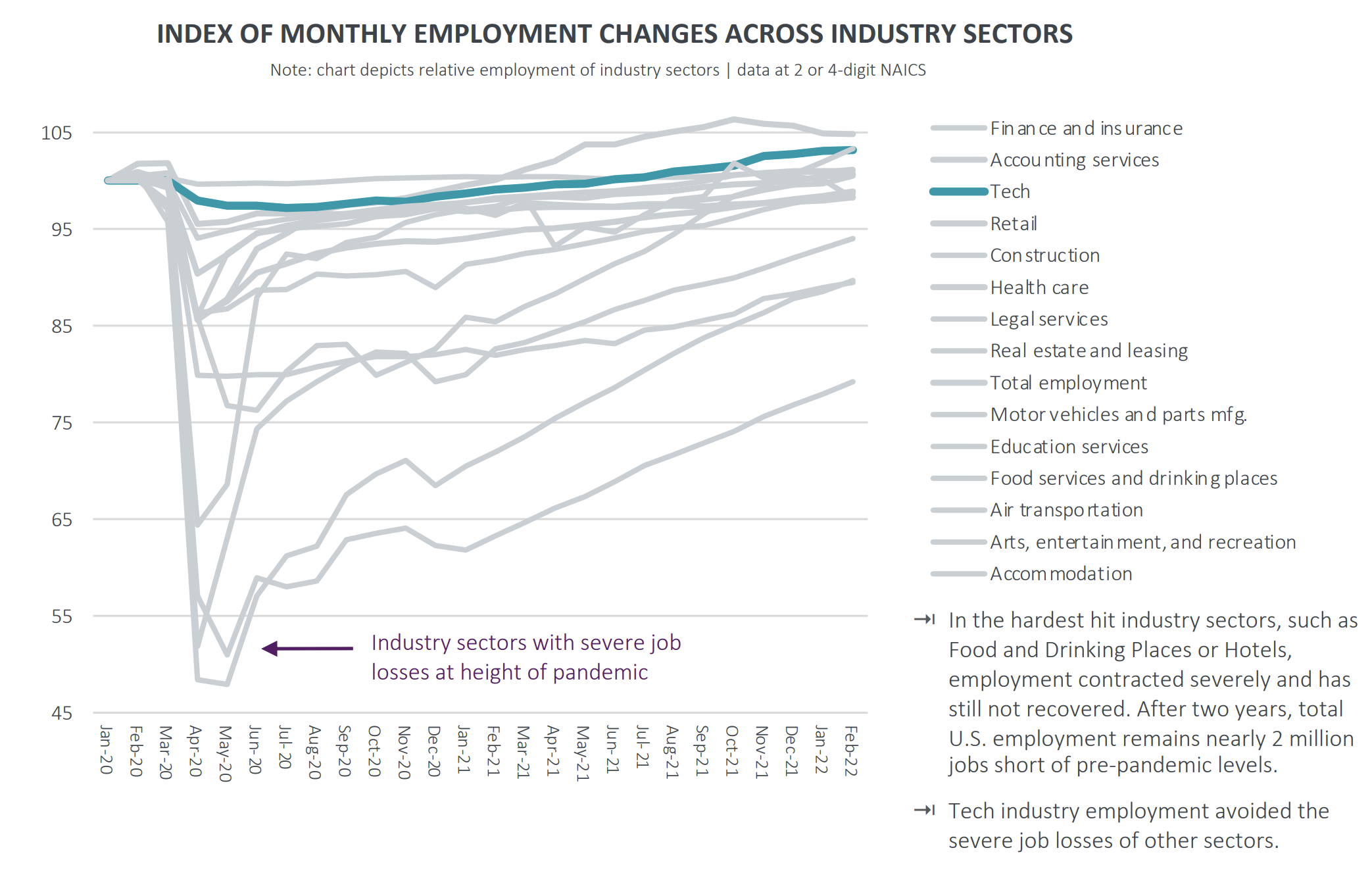
- Expected 26% increase in demand for software developers over the next 10 years as of 2021 by the U.S. Bureau of Labor Statistics
- Amazon (#2), Apple (#3), and Alphabet (#8) all sit in the top 10 of the Fortune 500 for 2022. This is an improvement over 2021 when Alphabet was #9 and an improvement again over 2020 when Apple was #4 and Alphabet was not even in top 10
- While a year-to-date heatmap of the stock market for technology services shows some pain for everyone, the past month shows mostly positive growth:
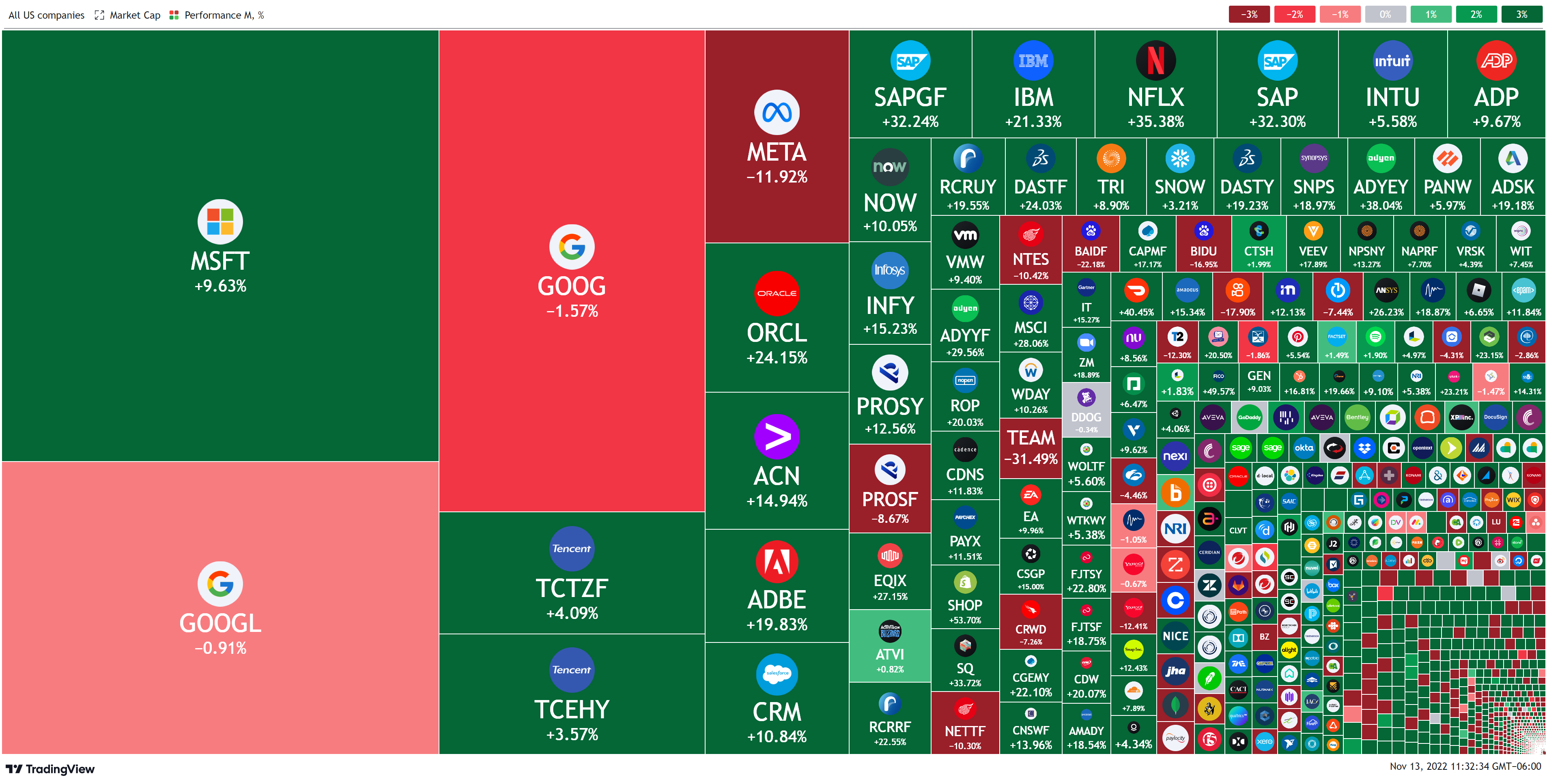
- That said, we do see Meta here with a relatively large drop in value 👀
I can only speculate about Meta and Twitter, but I would rather focus on this: software is in demand, so good software engineers are in demand.
Scaling business with automation, lowering operational costs, visualizing data to make informed decisions, analyzing data to reflect on performance and optimize, using machine learning to predict, classify, and categorize, I could go on and on…
The bottom line is that companies do not want to go back to slower manual processes and making uninformed decisions, just as those of us with cars would have a rough time switching to horse-drawn carriages.
Computing in general has come so far thanks to a concerted effort by many deeply interested people. I can only imagine the affects on software by hardware innovations such as widely-available quantum computing or year-long smartphone battery life (due to advances driven by the electric vehicle industry).
Until then, there is much to do, and I hope to inspire the next generation to rise to the challenge.